
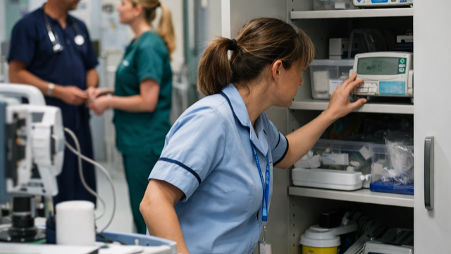
I keep hearing the same question in hospitals and community services.
“Where’s the bladder scanner?”
Or:
“We know we’ve got enough infusion pumps. Where are they today?”
There’s a pause.
People look at each other.
The equipment exists. It’s in the system.
But no one is certain where it is right now.
That moment of uncertainty is more expensive than we realise.
Sir Jim Mackey recently said : The NHS is still trying to do things as it did in the 70s, and that we need to find a “different game”, one that is more rational, more productive and better for patients and staff.
I think he’s right.
And I think this is where that different game starts.
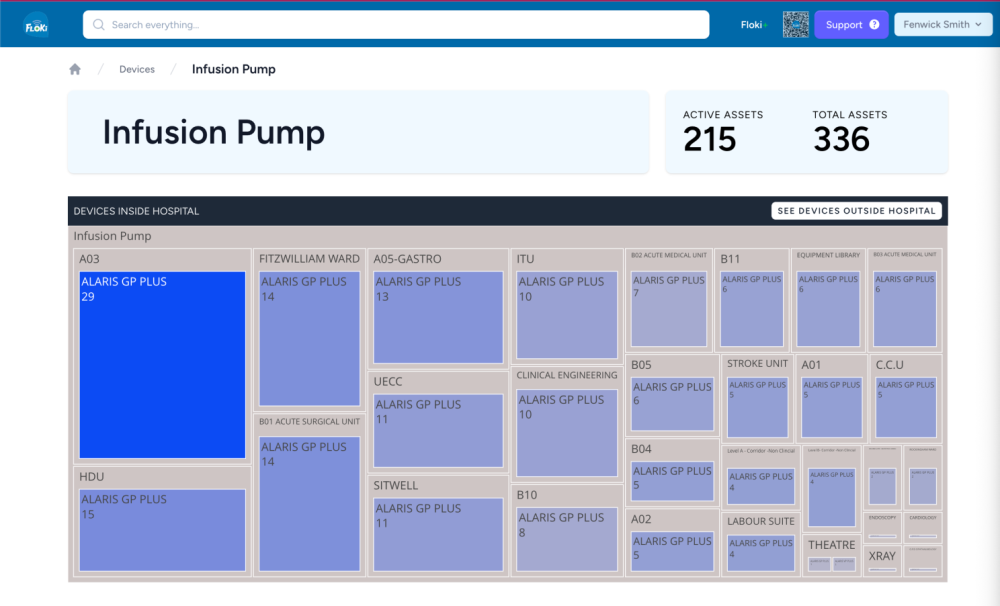
How Many and Where?
Uncertainty is not neutral
When equipment cannot be located at the point of need, the system defaults to safety.
We order another one.
We hire one.
We move one from somewhere else.
It feels responsible.
It protects flow.
But over time it quietly adds cost.
Hidden Effort & Costs : Framework costs + Budget approval + Procurement process + Transport + Testing Commissioning + Delivery to ward + Training + Servicing + Compliance tracking + Storage + Disposal + All these activities Carbon Duties
Every additional asset increases operational complexity.
We are not solving uncertainty.
We are paying handsomely to avoid confronting it.
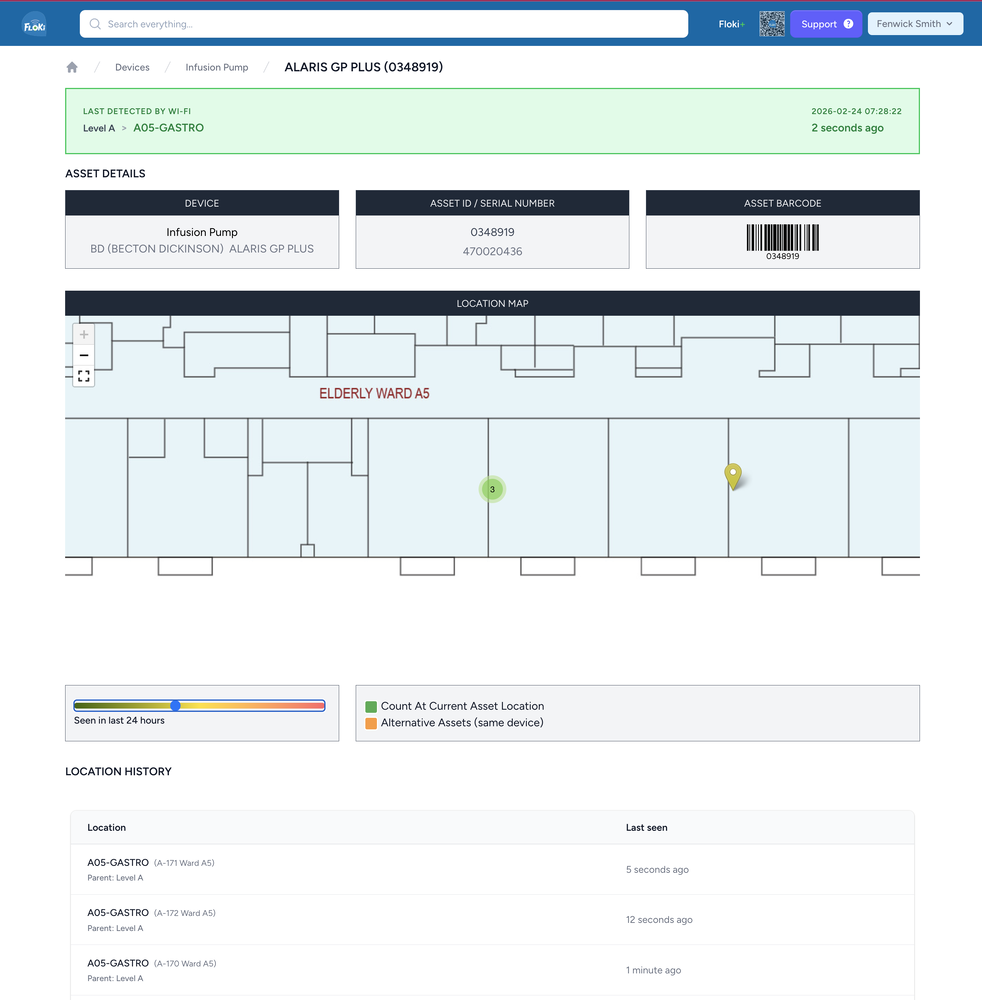
its here, right now
The pressure to do more with less
I was speaking to colleagues in a large NHS Board in Scotland yesterday.
They have been asked to work nine days out of ten.
The intention is understandable.
Protect budgets. Improve balance.
But the work does not disappear.
The equipment still moves.
Patients still need care.
Maintenance still needs done.
Compressing time does not remove friction.
It magnifies it.
When there is less time and less room for error, visibility becomes critical.
You cannot afford to spend time searching.
You cannot afford to make decisions without clarity.
This is not just about finance
A community nurse once said something to me that I have not forgotten.
After tracking and improving visibility of infusion pumps in her service, she told me:
“I don’t go home worrying anymore that someone might die in pain because we couldn’t find the equipment.”
She was not talking about productivity.
She was not talking about budgets.
She was talking about fear.
Operational uncertainty creates quiet anxiety for people who already carry enormous responsibility.
When you do not know where essential equipment is, you do not just lose time.
You lose confidence.
The financial context makes this harder
The King’s Fund has been clear that NHS finances are under sustained strain.
Leaders are being told to live within their means.
Increase productivity.
Avoid last minute bailouts.
At the same time, staffing costs, supply costs and patient complexity continue to rise.
Many leaders say they have already delivered significant efficiency improvements.
Yet the pressure remains.
That tells us something important.
This is not about effort.
It is about structural behaviour.
And one of those behaviours is making operational decisions without clear visibility.
The scale is bigger than it looks
In one department we worked with, improving visibility for one high movement asset type was estimated to reduce costs by more than £600,000 over five years.
That is one department.
One asset category.
Now scale that.
Five departments. Ten departments. Multiple asset types.
A whole hospital. An entire Trust.
You are no longer talking about thousands.
You are talking about millions.
Not because of dramatic reform.
Because of everyday friction repeated thousands of times.
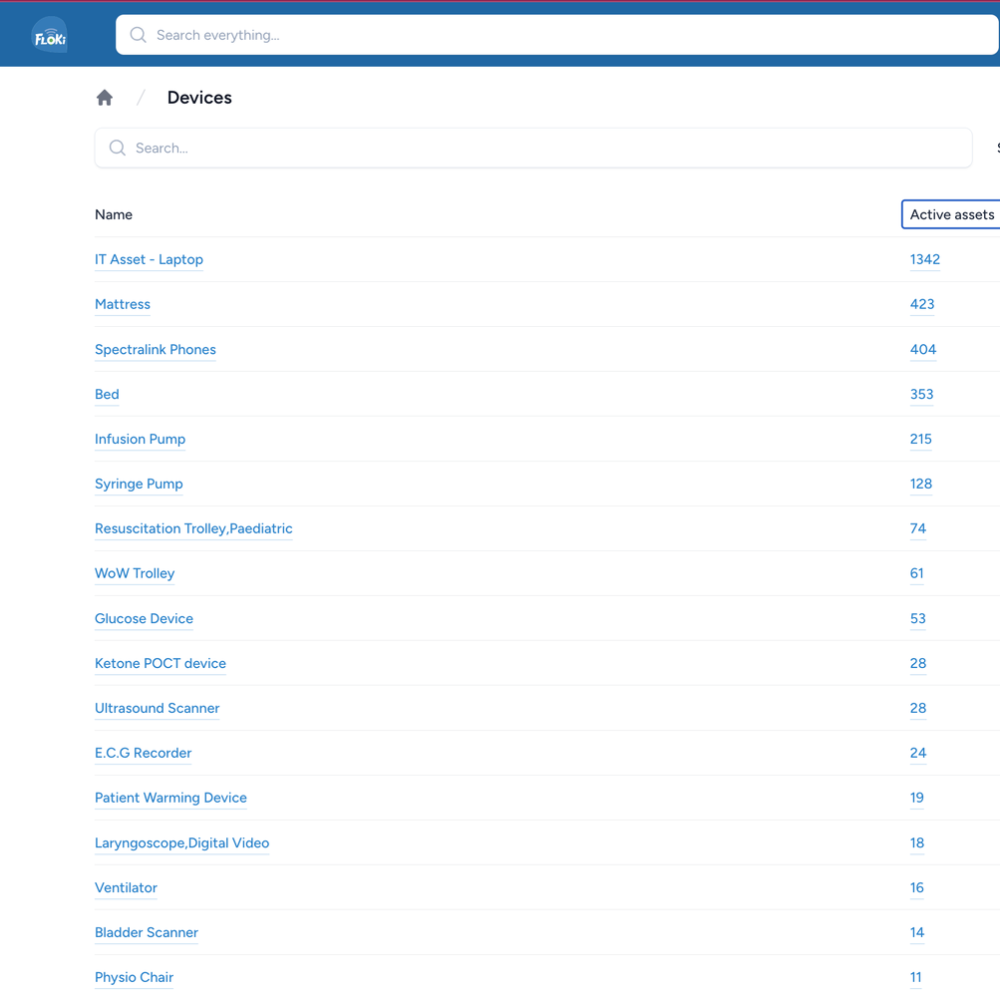
Select the devices that are really impactful, match how to track with the value gained.
Innovation, but practical
There is a lot of national conversation about innovation.
Moving from analogue to digital.
Shifting care from hospital to community.
All of that matters.
But innovation does not always mean new technology or major transformation programmes.
Sometimes it means something simpler.
Knowing where your equipment is.
Knowing what is compliant.
Knowing what is available.
Knowing what you actually need.
That is not glamorous.
But it is foundational.
Spend differently, not just more
In a constrained financial environment, leaders talk about frugal innovation.
Better value with minimal resource.
That might look like:
Barcode or QR based stock checks. Using smartphones rather than specialist hardware. RFID where it genuinely adds value. Clearer tracking between hospital and community. Smarter integration with portering teams.
Low tech first.
Right tech second.
Expensive tech only where justified.
Right now, it is often easier to get approval to buy another scanner than to improve how scanners are managed.
That is the old game.
The different game is investing modestly to remove uncertainty before increasing inventory.
Making work more rational
The King’s Fund has warned that financial risk is increasingly becoming clinical risk.
At the same time, staff are being asked to deliver unprecedented productivity gains.
If we want the NHS to be more productive, we have to make work more rational.
Every minute spent searching for equipment is capacity lost.
Every hour spent tracking down a device that is somewhere in the system is specialist skill diverted from patient care.
Making it easier to see clearly where equipment is, what is available and what is needed does not just improve performance metrics.
It makes the job more possible.
More sustainable.
More aligned with what people trained to do.
The different question
The question should not be:
“How many more devices do we need?”
It should be:
“How well are we using the ones we already have?”
The NHS cannot afford to manage uncertainty in the dark.
Not financially.
Not operationally.
And not emotionally for the people delivering care.
If we want a more rational, productive and sustainable system, the different game starts here.
It starts with reducing uncertainty. — Fen